
Progress needs physical systems.
Digital technologies often appear weightless. Their physical foundations are not. Every model trained, product manufactured, vehicle charged and facility automated depends on power generation, electrical distribution, cooling, networking, storage, controls and a supply chain capable of bringing those elements together. The quality of that foundation defines the ceiling of everything built on top of it.
We believe infrastructure deserves the same degree of strategic attention as the technology it enables. It should not be treated as a collection of utilities assembled after the important decisions have already been made. Power architecture influences compute density. Cooling strategy influences equipment choice. Grid conditions influence expansion plans. Operational requirements influence automation. Each decision affects the others.
That is why TERAVEX starts with the system rather than the catalogue. We work backward from the required outcome: capacity, resilience, efficiency, speed of deployment, regulatory fit and room for future change. Technologies are evaluated within that context. Partners are selected for the role they must perform. Interfaces are clarified before they become expensive problems in the field.
Our ambition is not to make infrastructure more complicated. It is to make complexity manageable. A well-designed system should give its operators clarity, not another layer of uncertainty. It should perform under real conditions, remain understandable as it grows and preserve choices for the future.
Infrastructure is not the background of technological progress. It is the mechanism that makes progress possible.
Complexity has moved into the interfaces.
The components required for modern infrastructure already exist. The harder problem is getting them to work together—technically, commercially and operationally. Energy storage must coordinate with power conversion, grid protection and energy management. High-performance computing must be aligned with electrical capacity, thermal design, network topology and deployment schedules. Industrial automation must connect machinery, software, safety systems and the people responsible for running the operation.
Traditional project structures divide these questions between manufacturers, consultants, contractors and internal teams. Specialization is necessary, but fragmented ownership creates gaps. Requirements are interpreted differently. Decisions are optimized locally. Information is lost between phases. By the time an incompatibility becomes visible, equipment may already be ordered and schedules may already depend on it.
The cost of those gaps is measured in more than project overruns. It appears as stranded electrical capacity, underutilized compute, delayed interconnections, inefficient operations and facilities that are difficult to expand. Organizations then spend years compensating for decisions that were never evaluated as part of one architecture.
TERAVEX addresses the interfaces directly. We connect the operating objective to the technical concept, the concept to qualified technology and the technology to a coordinated delivery plan. This does not remove the need for specialists. It gives specialists a shared system boundary and a clearly defined outcome.
The result is a more coherent project environment: fewer assumptions, more explicit dependencies and decisions that can be understood in terms of the complete system. That clarity is especially important in infrastructure programs where energy, compute and industrial technology converge.
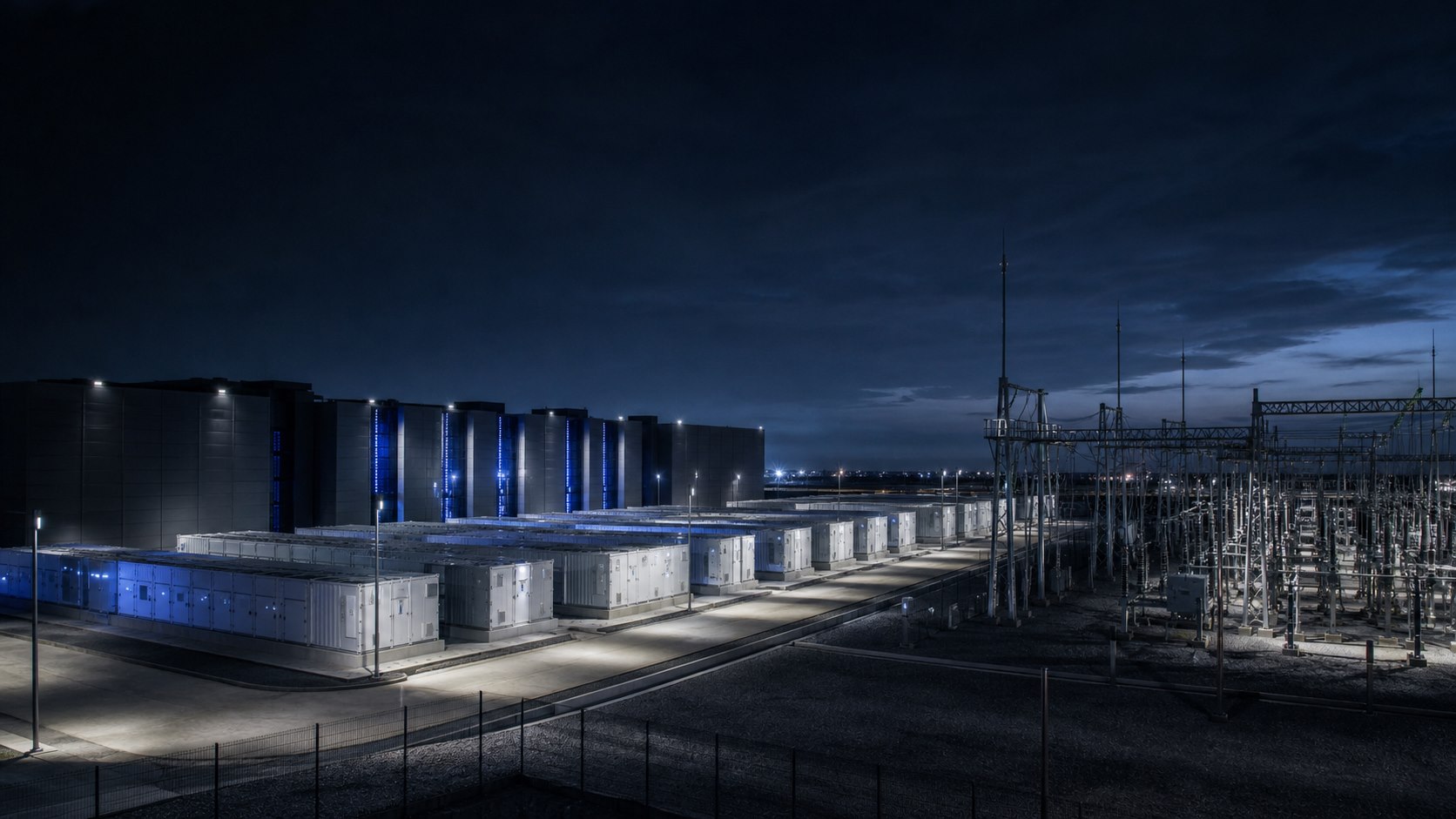 Integrated infrastructure environment / Energy + Compute
One path from ambition to operation.
Our operating model follows the full life of an infrastructure decision. It begins before a product is selected and continues beyond commissioning. At each stage, the objective is to reduce uncertainty while preserving the ability to make better choices as new information becomes available.
Discover the operating objective.
We begin with the organization, not the equipment. What must the system enable? Which constraints are fixed? What level of resilience is genuinely required? How quickly must capacity become available, and how is demand expected to change? These questions establish the decision framework for everything that follows.
Assess the complete environment.
Technical requirements are evaluated alongside site conditions, available power, regulatory pathways, commercial targets, delivery risk and internal operating capability. The purpose is not to produce an abstract study. It is to expose the dependencies that determine whether a concept can become a reliable operating system.
Engineer the architecture.
TERAVEX coordinates the system concept with specialized engineering and technology partners. Major interfaces, performance requirements and expansion paths are defined early. The architecture remains technology-aware without becoming dependent on one vendor before the project has earned that commitment.
Source for fit, not familiarity.
Manufacturers and components are selected against the requirements of the architecture: quality, lifecycle support, interoperability, availability, compliance and total operating value. An independent sourcing perspective gives the project access to a broader technology landscape while maintaining one consistent evaluation standard.
Deliver with accountable coordination.
Procurement, logistics, installation, integration, commissioning and handover are coordinated as connected phases. The specific delivery structure adapts to the project, but ownership of the system objective remains clear. After operation begins, the same system view supports optimization, service strategy and future expansion.
Built on an entrepreneurial foundation.
TERAVEX is an infrastructure initiative of Kastl Ventures GmbH, an independent German company focused on building and developing future-oriented business activities. Kastl Ventures GmbH provides the legal and organizational foundation from which TERAVEX operates, forms partnerships and develops its long-term infrastructure platform.
The relationship is deliberate. Infrastructure projects require technical depth, but they also require entrepreneurial judgment: the ability to evaluate new markets, assemble the right capabilities, allocate attention to the decisions that matter and create structures that remain viable beyond a single transaction. Kastl Ventures GmbH brings that company-building perspective to TERAVEX.
TERAVEX is therefore not positioned as a conventional equipment reseller. Nor is it limited to one technology category. The company is being developed as an integrator and coordinator across energy infrastructure, compute infrastructure and intelligent industrial systems—three domains that are increasingly inseparable in real operating environments.
Based in Germany and designed to work internationally, the organization combines local accountability with access to a broader network of manufacturers, engineering organizations and specialized technology companies. Every collaboration is evaluated against the same question: does it improve the quality, resilience and long-term value of the system delivered to the client?
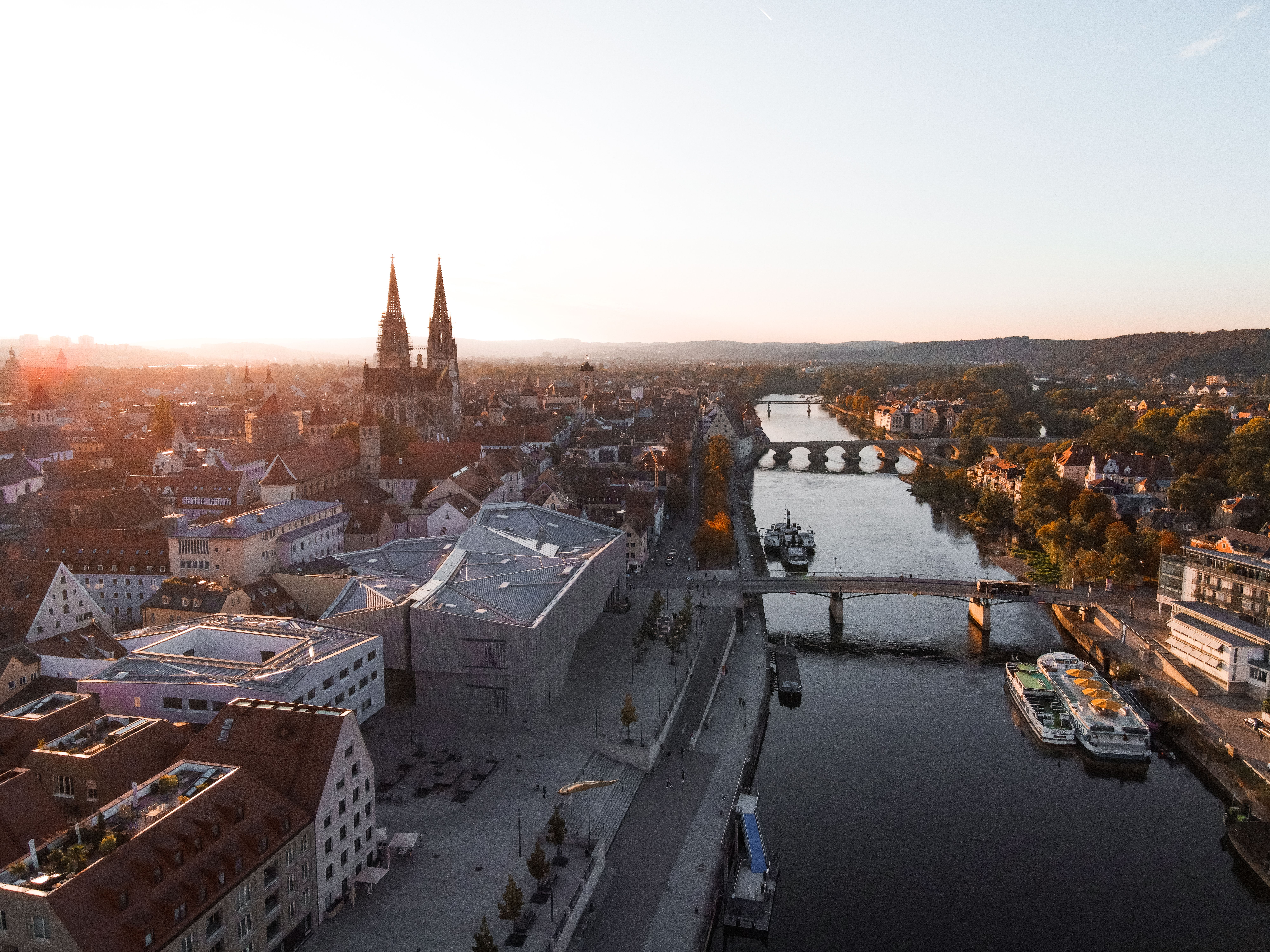
Rooted locally.
Built to coordinate globally.
The best system rarely comes from one catalogue.
No single manufacturer owns every answer to a complex infrastructure program. The strongest solution often combines established equipment, specialized engineering, emerging technologies and local delivery capability. Access to those capabilities matters. The ability to qualify and coordinate them matters more.
TERAVEX develops relationships with technology manufacturers, system specialists, engineering firms and implementation partners across relevant markets. The network is not presented as a list of logos. It is an operating resource that can be assembled around the needs of a specific project.
Partners are considered through a long-term lens. Product performance is only one dimension. We also examine technical documentation, integration behavior, manufacturing quality, delivery reliability, regulatory suitability, support capability and the willingness to resolve problems transparently. Infrastructure continues to create obligations long after the initial sale; the partner ecosystem must be able to carry those obligations.
Independence is equally important. TERAVEX does not begin with a requirement to place a particular product. This allows the architecture to lead the selection process and makes tradeoffs visible to the client. Where a proven standard solution is sufficient, unnecessary novelty is avoided. Where a new technology creates material advantage, it can be evaluated within a disciplined system framework.
Our role is to turn distributed expertise into coordinated capability. The client receives access to specialists without inheriting the burden of aligning every interface alone.
Partnership expands capability. Accountability turns capability into an outcome.
Infrastructure should outlast the moment.
The next decade will place extraordinary demands on physical systems. Artificial intelligence is increasing power density and accelerating the construction of compute capacity. Electrification is reshaping generation, storage and distribution. Industrial organizations are connecting physical operations to software at a deeper level. At the same time, energy volatility, supply constraints and regulatory complexity are making infrastructure decisions harder to reverse.
Short-term optimization is not enough in this environment. Systems must be designed for conditions that will change: new equipment generations, higher loads, different operating strategies and technologies that are not yet commercially mature. Future readiness does not mean predicting every development. It means creating architectures with understandable interfaces, modular expansion paths and enough operational visibility to adapt deliberately.
Our vision is a world in which critical infrastructure is no longer a passive constraint on progress. Energy systems should actively balance resilience, cost and flexibility. Compute environments should connect performance ambitions to the physical realities of power and cooling. Industrial infrastructure should make operations more observable, adaptable and efficient without weakening reliability.
TERAVEX intends to help build that world one system at a time. We will continue expanding the depth of our partner network, the quality of our project methods and our ability to connect technologies that are too often considered separately. Growth matters, but the standard matters more: clear thinking, qualified execution and infrastructure designed for the people who must depend on it.
That is the long-term purpose shared by TERAVEX and Kastl Ventures GmbH—to create durable capability around consequential infrastructure and to become a trusted partner for organizations building what comes next.